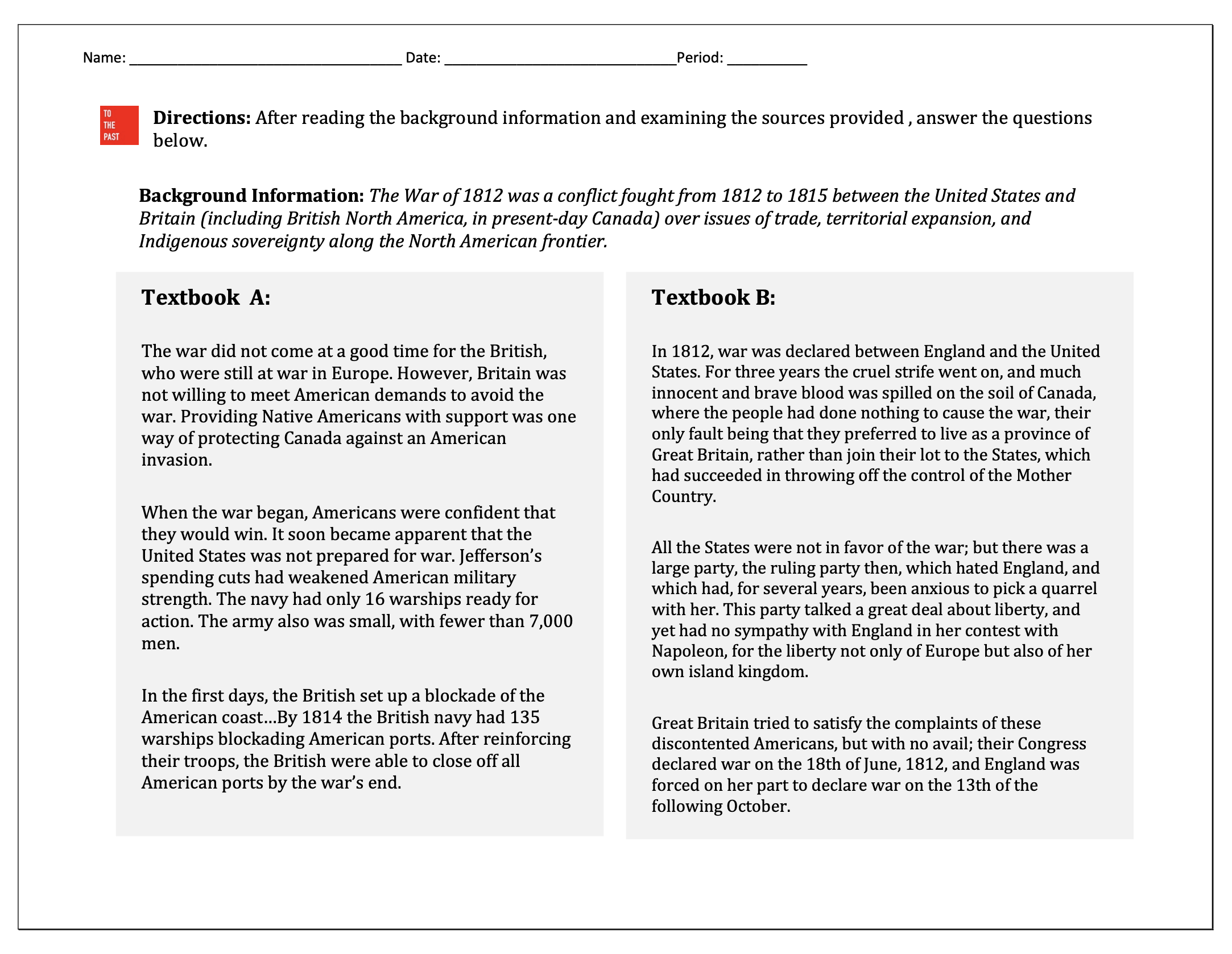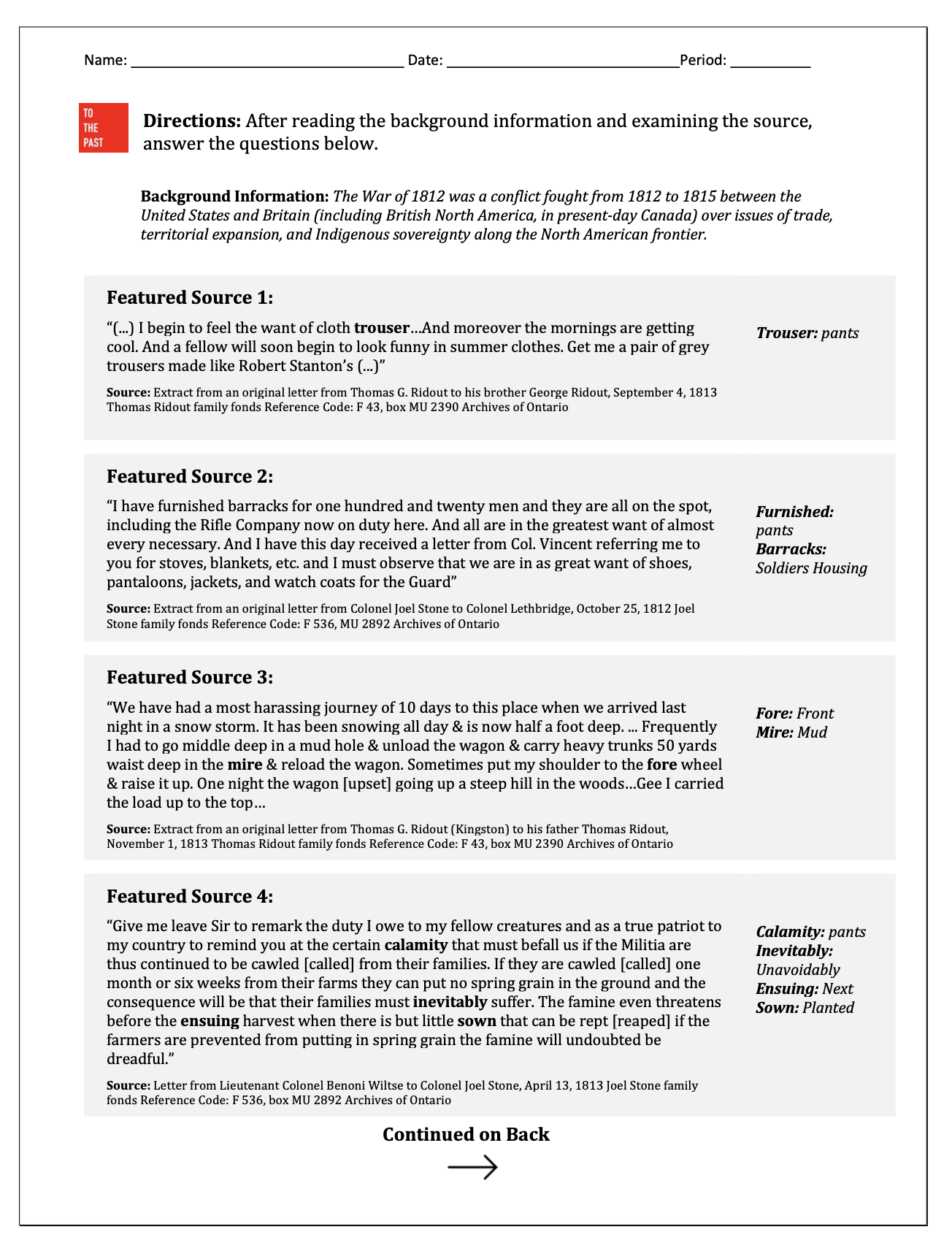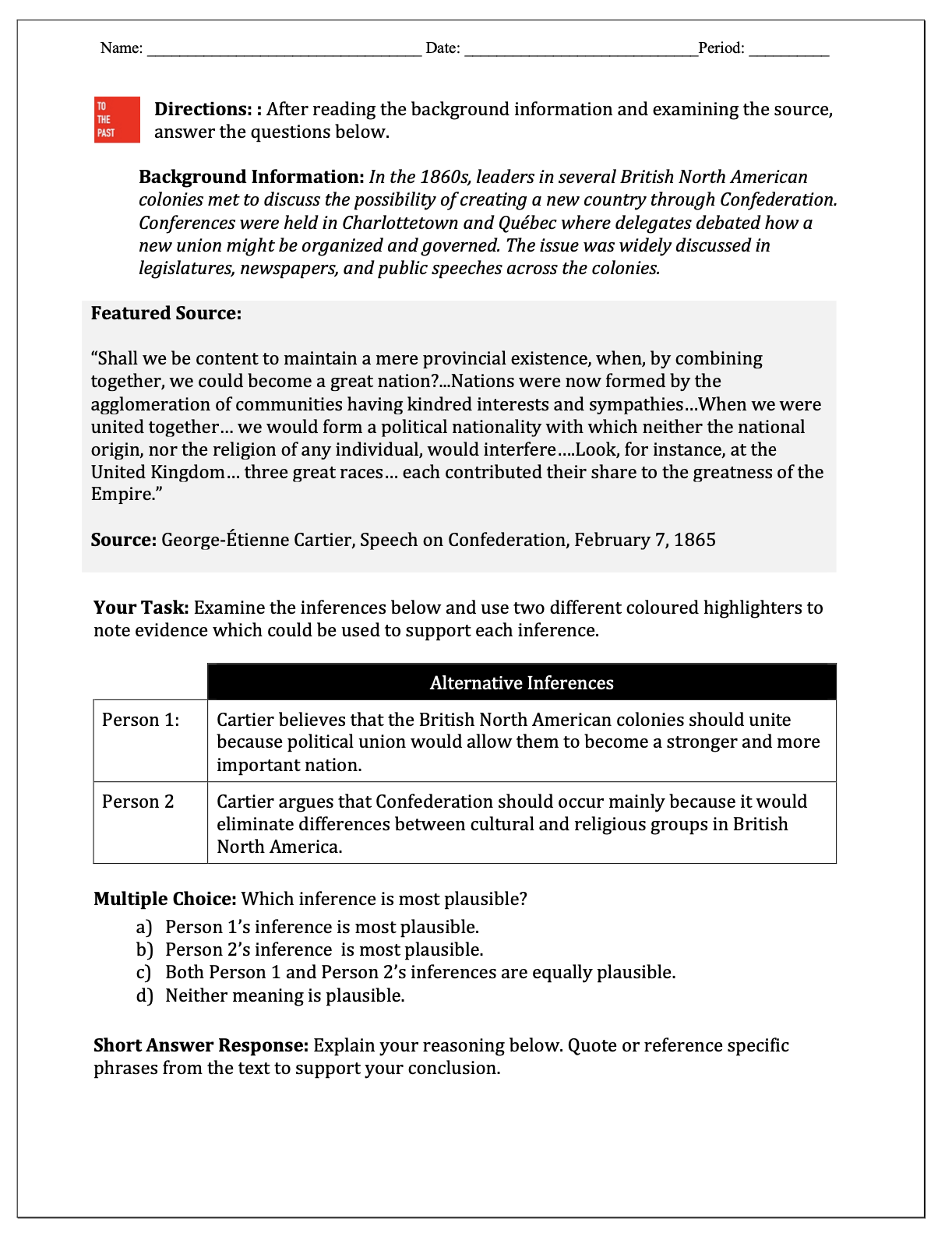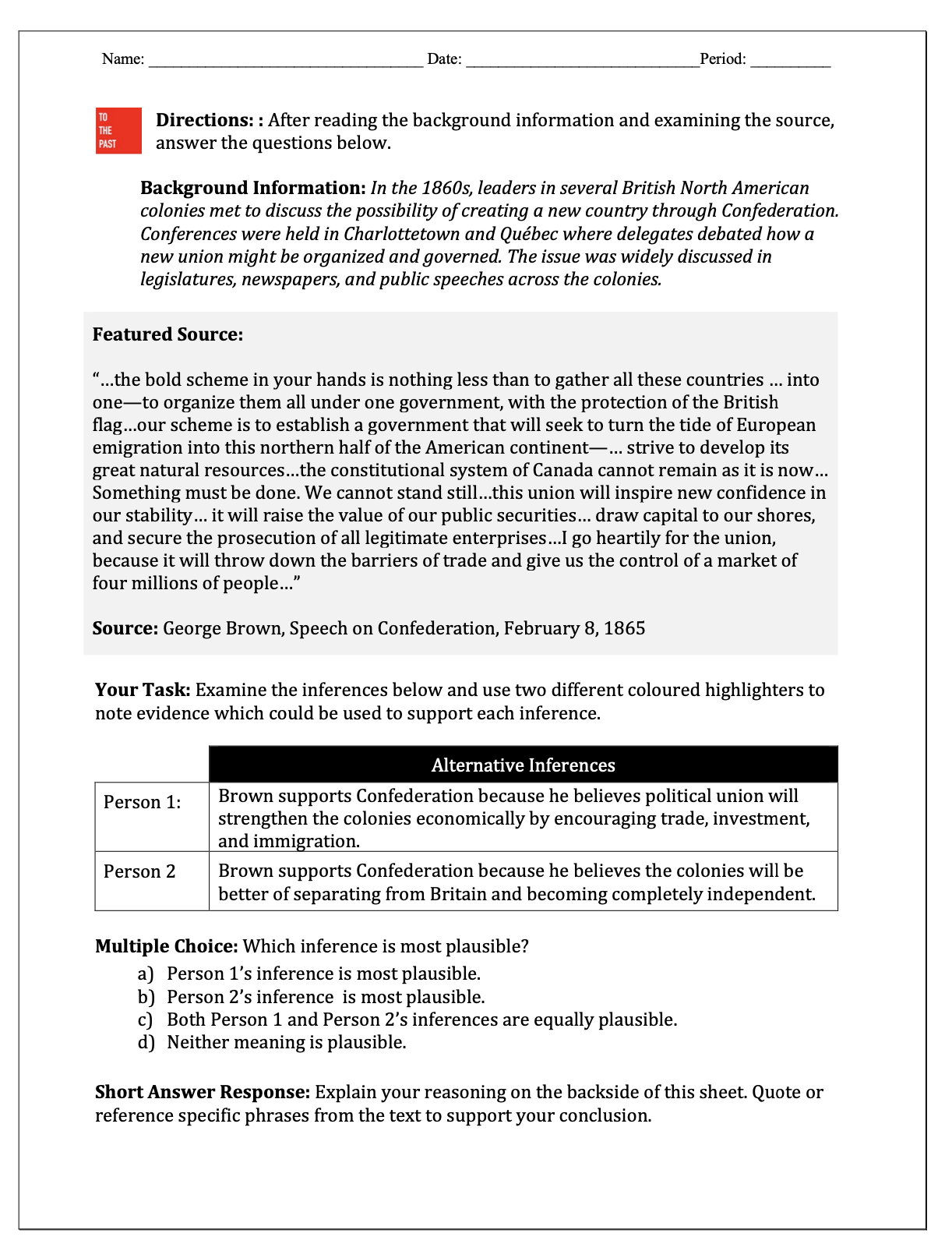
Cognition: What Model of Student Thinking Is Being Assessed?
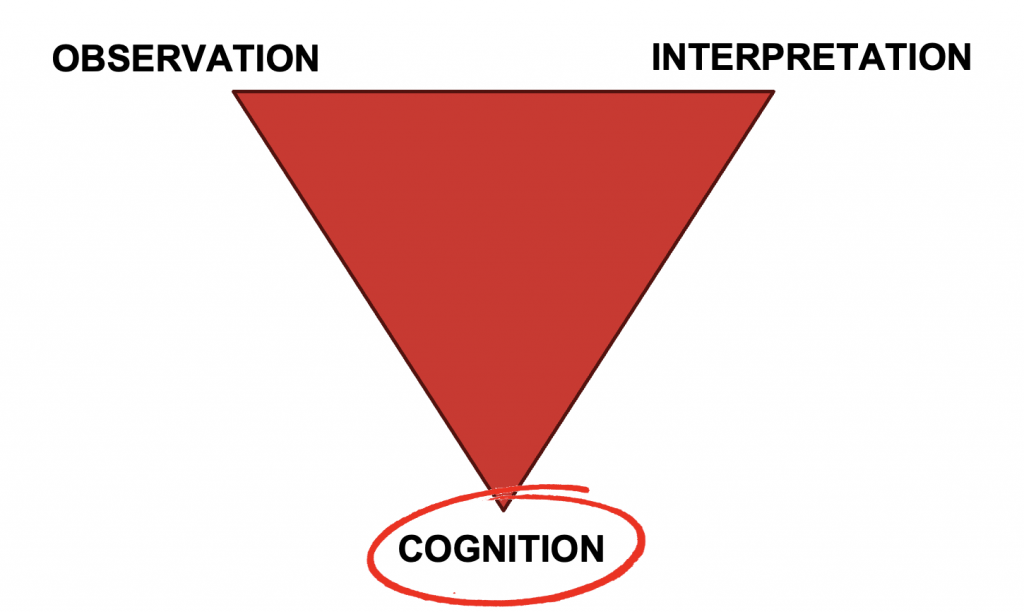
Any strong assessment begins with a clear model of cognition. In history education, that means moving beyond broad labels or instructions—like “analyze the source” “think critically about this source”—and getting much more precise about what students are actually doing when they think historically.
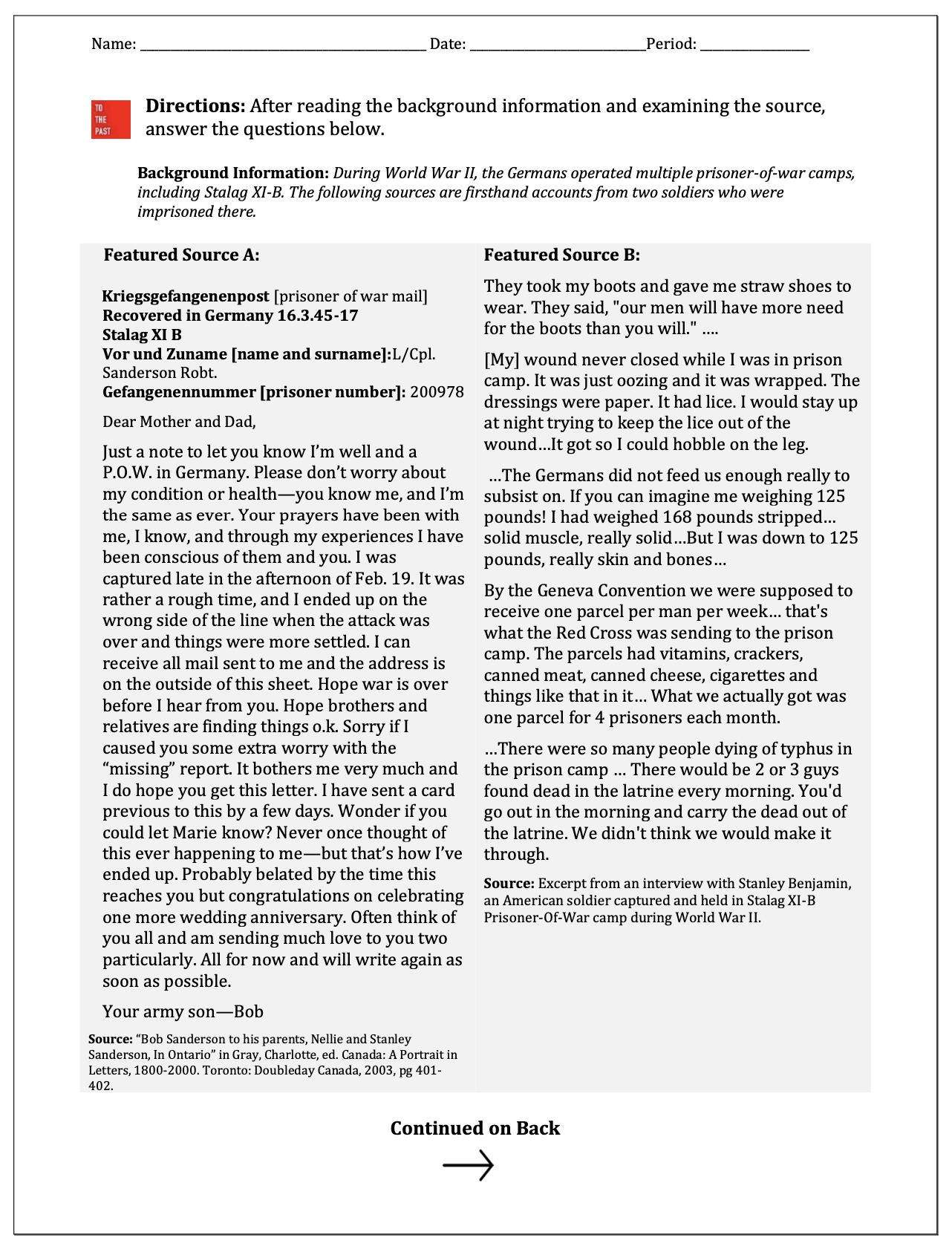
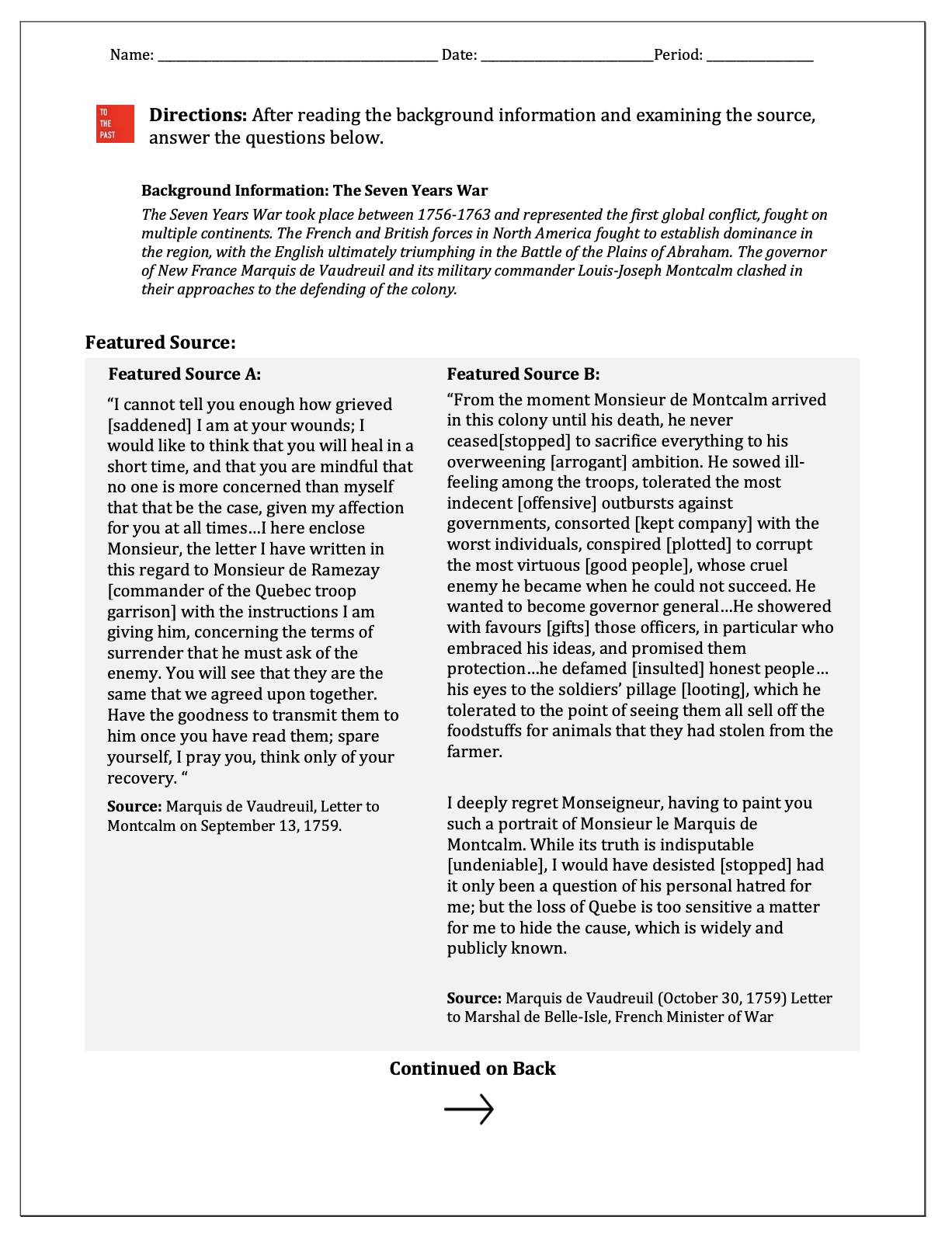
The assessment tasks available on ToThePast.ca on the Big Six benchmark of Evidence. However within this benchmark, Seixas & Morton suggest several key cognitive moves, or competencies that we want students to demonstrate: questioning, sourcing, contextualization, drawing inferences, and corroboration.
However rather than treating something like sourcing as a single skill, we need to drill down what kind of habits of mind and connections students need to effectively and usefully source a document, that is, what does a student actually have to think and do in order to source a document well?
If we ask students to “evaluate the strengths and limitations of a source in relation to a specific inquiry”, they must engage in a sequence of smaller tasks before they can meaningfully answer that question including:
- Identifying the author/creator of the source: What experiences might have shaped their perspective? Are they directly involved in the events, or observing from a distance? How might the author’s identity influence what they say or leave out?
- Identifying the time and place of its creation: What had happened just before this was created? What broader movements or trends (political, economic, social) were shaping this moment? How might this context shape what the author knows or believes?
- Recognizing the type of source and intended audience (speech, diary, law, memoir, etc.): What is the typical purpose of this kind of source? Is it private or public? Is it formal or informal? How might the type of source shape what is included or excluded?
Only then can they consider how these factors shape the reliability and limitations of the source. Each of these is small, but none are trivial. Together, they form what we casually refer to as “sourcing.”
The power of this narrowing process is that it transforms something vague into something assessable. Instead of asking, Did the student source the document?, we can now ask much more precise questions:
- Did the student correctly identify who created the source?
- Did they connect the author’s position or context to the content of the source?
- Did they use that information to qualify how much weight the source should carry?
This shift matters because it exposes where student thinking breaks down. A student might successfully identify the author, their role or relation to the event, but fail to connect that to how that might shape how we read the source. They might correctly identify that a source is a speech delivered in the House of Commons, but fail to consider how that setting influences the tone, purpose, and content of what is said.
It is through this processes of clarification of steps that we can make disciplinary thinking visible, not only for assessment purposes, but more importantly, for learning purpose.
Once sourcing (and the other evidence-related moves) are broken into their component parts, we can better:
- Design tasks that actually elicit those specific moves
- Create criteria that are clear and consistently interpretable
- Provide feedback that is targeted and actionable
It also changes how students experience the task. Instead of being told to “analyze the source,” they are implicitly guided toward a series of concrete intellectual actions. Over time, our hope is that these actions become internalized as habits of mind.
In our next post, we will discuss how we can craft assessment models that might accomplish this more effectively. Doing so requires careful thought regarding the kinds of constraints we build into tasks, the formats we ask students to respond in, and how each of these design choices either reveals or obscures the thinking we are trying to assess.